
Rotator Cuff Repair in Frisco, TX
The rotator cuff is a group of four muscles and tendons that keep the ball of the shoulder centered in the socket and power lifting and rotating the arm. Tears can happen suddenly, from a fall or heavy lift, or develop gradually with age and repetitive overhead activity. Dr. Andrew Dold, a double board-certified, fellowship-trained sports medicine surgeon who has treated professional athletes from the NFL, NBA, NHL, PGA Tour and Major League Rugby, as well as USA Gymnastics athletes, treats rotator cuff tears for athletes, workers and active adults across Dallas–Fort Worth.
Signs of a Rotator Cuff Tear
- Shoulder pain at night or when lying on the affected side
- Pain when lifting or reaching overhead
- Weakness when raising or rotating the arm
- Sudden weakness or inability to lift the arm after a fall or injury
Your evaluation with Dr. Dold includes a detailed shoulder exam and X-rays, with an MRI or ultrasound when a significant tear is suspected.
Treatment Options
The right treatment depends on the type and size of the tear, how it happened, your age and your activity goals.
Nonsurgical treatment
Many partial and age-related tears improve with physical therapy focused on shoulder strength and mechanics, activity changes, anti-inflammatory medication and, in some cases, injections. Orthobiologic options such as platelet-rich plasma (PRP) may also be discussed.
Arthroscopic rotator cuff repair
When a tear is causing ongoing pain and weakness, or when a tendon has been torn in an acute injury, surgical repair is often recommended. Dr. Dold performs rotator cuff repair arthroscopically, using a small camera and instruments through small incisions to reattach the torn tendon to the bone with suture anchors. Related problems, such as biceps tendon or labral injuries, can often be addressed during the same surgery.
Large and complex tears
For large, long-standing or previously repaired tears, additional options may be considered, including tendon augmentation or reconstruction, and in some cases shoulder replacement. Dr. Dold will review your imaging with you and explain which options fit your shoulder.
Recovery
Recovery after rotator cuff repair is carefully staged to protect the healing tendon: a period in a sling, then guided motion with physical therapy, followed by progressive strengthening. Return to work, sports and overhead activity depends on the size of the tear and your goals, and full recovery typically takes many months.
Why Choose Dr. Dold for Rotator Cuff Care
- Fellowship-trained in sports medicine and arthroscopy at NYU Langone Orthopedic Hospital and the Hospital for Joint Diseases
- Research on shoulder suture anchor fixation, published in Knee Surgery, Sports Traumatology, Arthroscopy, and author of a book chapter on superior labrum (SLAP) repair
- Board certified in the U.S. (ABOS, with a Subspecialty Certificate in Orthopaedic Sports Medicine) and Canada (FRCSC)
- Medical Director of the Gatorade Sports Science Institute at The Star
Frequently Asked Questions
Will a rotator cuff tear heal on its own?
Torn tendon does not usually reattach to bone on its own, but many people, especially with partial or age-related tears, get good pain relief and function with physical therapy. Some tears can enlarge over time, so Dr. Dold monitors tears that are treated without surgery.
Do I need an MRI?
Not always. Many rotator cuff problems can be diagnosed with an exam and X-rays. An MRI or ultrasound is used when a significant tear is suspected or surgery is being considered.
Is rotator cuff repair an outpatient surgery?
Yes. Arthroscopic rotator cuff repair is performed through small incisions, and most patients go home the same day.
How long will I be in a sling?
Most patients wear a sling for several weeks after repair to protect the healing tendon. Dr. Dold will tailor the timing to the size of the tear and the strength of the repair.
When can I return to work and sports?
It depends on your job, your sport and the size of the tear. Desk work often resumes sooner than heavy labor or overhead sports. Full recovery after rotator cuff repair takes many months, and Dr. Dold will guide your return step by step.
Schedule a Shoulder Evaluation
Dr. Dold sees patients at Star Orthopedics and Sports Medicine, 6700 Dallas Parkway, Suite 100, Frisco, Texas, from Frisco, Plano, McKinney, Prosper, Allen, Dallas and across DFW. Most major insurance accepted, including Medicare and Tricare. Call 469-850-0680 or request an appointment online.
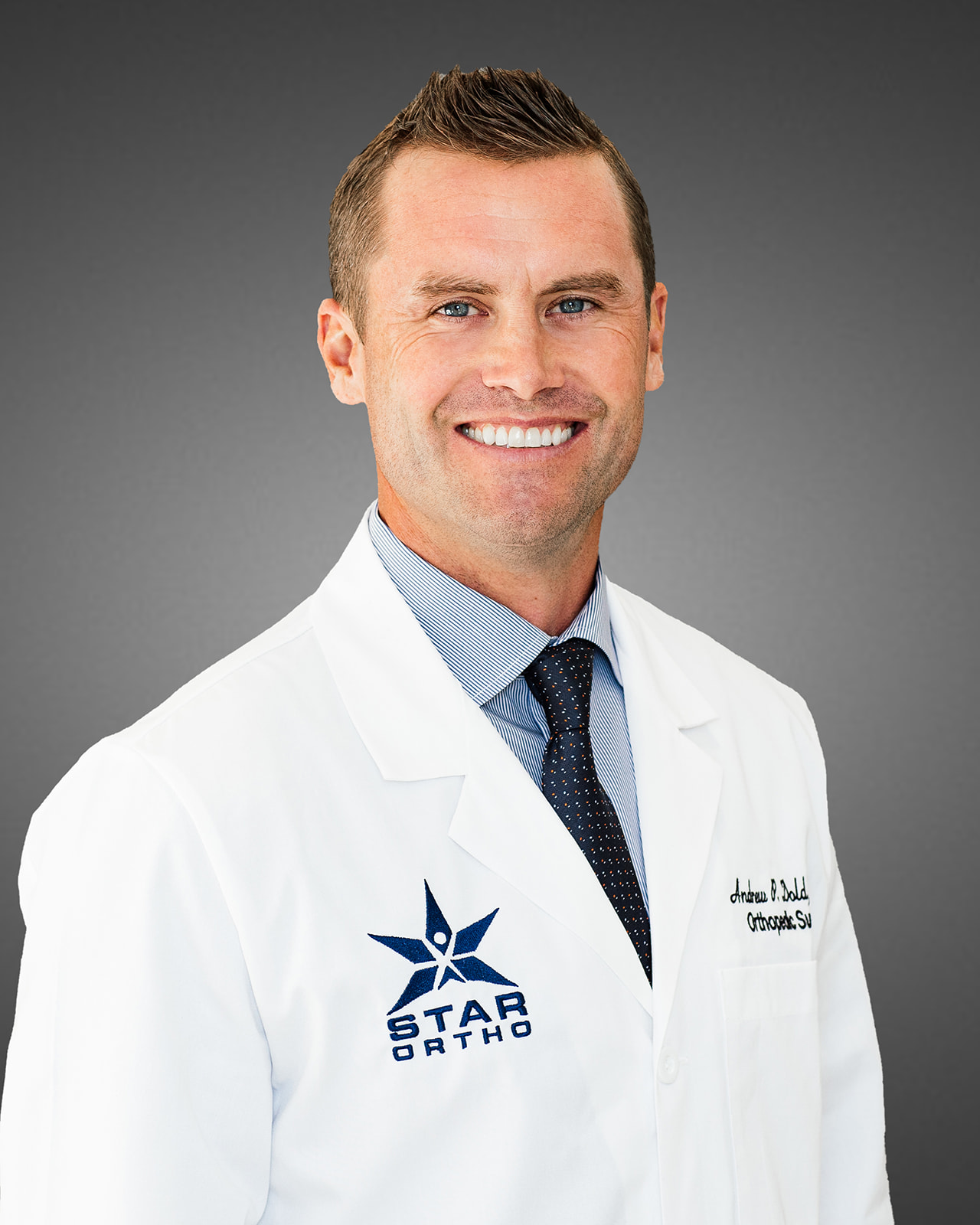
Dr. Andrew Dold, MD
- Double board-certified orthopedic surgeon (ABOS, FRCSC)
- Sports medicine and arthroscopy fellowship, NYU Langone
- Has treated professional athletes from the NFL, NBA, NHL, PGA Tour and Major League Rugby, as well as USA Gymnastics athletes
- Medical Director, Gatorade Sports Science Institute at The Star
- D Magazine Best Doctors, 2019–2026
More from Dr. Dold: read his full patient guide to rotator cuff tears, with the research behind it, on DoldMD.com.
Request an Appointment with Dr. Dold
Or call 469-850-0680