
Achilles Tendon Rupture Treatment in Frisco, TX
The Achilles tendon connects the calf muscles to the heel and is the largest tendon in the body. Ruptures usually happen during explosive movements such as sprinting, jumping or quick changes of direction, and are most common in recreational athletes in their 30s and 40s playing sports like basketball, tennis, pickleball and soccer. Dr. Andrew Dold, a double board-certified, fellowship-trained sports medicine surgeon who has treated professional athletes from the NFL, NBA, NHL and PGA Tour, treats Achilles tendon ruptures for athletes and active adults across Dallas–Fort Worth, and is the author of a 2025 review of Achilles rupture treatment in the Journal of the American Academy of Orthopaedic Surgeons.
Featured research by Dr. Dold
Dold AP. “Acute Achilles Tendon Ruptures: An Update on Current Management Strategies.” Journal of the American Academy of Orthopaedic Surgeons. 2025;33(16):881–889.
Dr. Dold is the sole author of this review of the latest evidence on treating Achilles tendon ruptures, published in JAAOS, the peer-reviewed journal of the American Academy of Orthopaedic Surgeons. Read the article in JAAOS · View on PubMed
Signs of an Achilles Rupture
- A sudden “pop” or the feeling of being kicked in the back of the calf
- Pain and swelling above the heel
- Weakness pushing off or standing on your toes
- A gap you can feel in the tendon
Your evaluation with Dr. Dold includes a detailed exam, including a calf squeeze (Thompson) test, and imaging such as ultrasound or MRI when needed.
Treatment Options
The right treatment depends on your age, activity level, sport, overall health and how long ago the injury happened. Dr. Dold reviews every option with you:
- Nonsurgical treatment with accelerated rehabilitation — a walking boot that holds the foot pointed down, early protected weight-bearing and motion, and a structured rehabilitation program
- Minimally invasive (percutaneous) repair — repairing the tendon through small incisions to reduce wound complications
- Open repair — a traditional approach that provides a strong repair and low re-rupture rates
- Reconstruction — for ruptures diagnosed late, when the tendon ends can no longer be brought back together directly
What Dr. Dold’s Research Shows
In his JAAOS review, Dr. Dold examined the current evidence on surgical and nonsurgical treatment. Key points for patients:
- There is more than one effective treatment. Both surgery and nonsurgical care can produce excellent results, and the best choice depends on the individual patient.
- Rehabilitation matters as much as the treatment choice. When nonsurgical treatment is paired with accelerated functional rehabilitation (early, protected motion), several large analyses found re-rupture rates similar to surgery. Older protocols with long periods of immobilization had higher re-rupture rates.
- Surgery and nonsurgical care have different trade-offs. Nonsurgical treatment avoids surgical risks such as wound infection and nerve irritation, while surgical repair tends to restore tendon length more closely, which can matter for calf strength.
- Minimally invasive repair is a strong surgical option. Percutaneous techniques use small incisions and, in the studies reviewed, reduced wound complications without increasing re-rupture rates.
- Early diagnosis is important. Ruptures left untreated for weeks were associated with poorer outcomes.
- PRP results are mixed. Platelet-rich plasma has shown some benefits in certain studies but not in others, so it is not a routine part of treatment.
Recovery and Return to Sport
Whether or not you have surgery, recovery follows a careful progression: protected weight-bearing in a boot, gradual return to normal walking, then calf strengthening, running and sport-specific training. Return to sport is based on strength and functional milestones rather than time alone, and typically takes many months.
Why Choose Dr. Dold for Achilles Tendon Injuries
- Author of “Acute Achilles Tendon Ruptures: An Update on Current Management Strategies” in JAAOS (2025)
- Fellowship-trained in sports medicine and arthroscopy at NYU Langone Orthopedic Hospital and the Hospital for Joint Diseases
- Board certified in the U.S. (ABOS, with a Subspecialty Certificate in Orthopaedic Sports Medicine) and Canada (FRCSC)
- Medical Director of the Gatorade Sports Science Institute at The Star
Frequently Asked Questions
Do all Achilles tendon ruptures need surgery?
No. With modern accelerated rehabilitation, nonsurgical treatment is an excellent option for many patients, and surgery remains a strong option for others, especially highly active patients and athletes. Dr. Dold will walk you through the benefits and risks of each so you can choose what fits your goals.
How is an Achilles rupture diagnosed?
Most ruptures can be diagnosed with a physical exam, including a calf squeeze (Thompson) test. Ultrasound or MRI is sometimes used to confirm the injury or assess the gap between the tendon ends.
How soon should I be seen?
As soon as possible. Ruptures that go untreated for several weeks tend to have poorer outcomes and may need more complex surgery, so early evaluation keeps all of your options open.
What is minimally invasive Achilles repair?
Minimally invasive (percutaneous) repair uses much smaller incisions than traditional open surgery, typically under 3 cm, to reduce wound problems while still repairing the tendon. It is performed as an outpatient procedure.
Does PRP help an Achilles rupture heal?
The research on platelet-rich plasma (PRP) for Achilles ruptures is mixed, and it is not a standard part of treatment. Dr. Dold can discuss whether it makes sense in your case.
When can I return to sports?
Recovery from an Achilles rupture takes months, whether or not you have surgery. Return to running and sport is based on calf strength and functional milestones, and Dr. Dold will give you a timeline based on your treatment and goals.
Schedule an Achilles Evaluation
If you think you have torn your Achilles, an early evaluation keeps all of your options open. Dr. Dold sees patients at Star Orthopedics and Sports Medicine, 6700 Dallas Parkway, Suite 100, Frisco, Texas, from Frisco, Plano, McKinney, Prosper, Allen, Dallas and across DFW. Most major insurance accepted, including Medicare and Tricare. Call 469-850-0680 or request an appointment online.
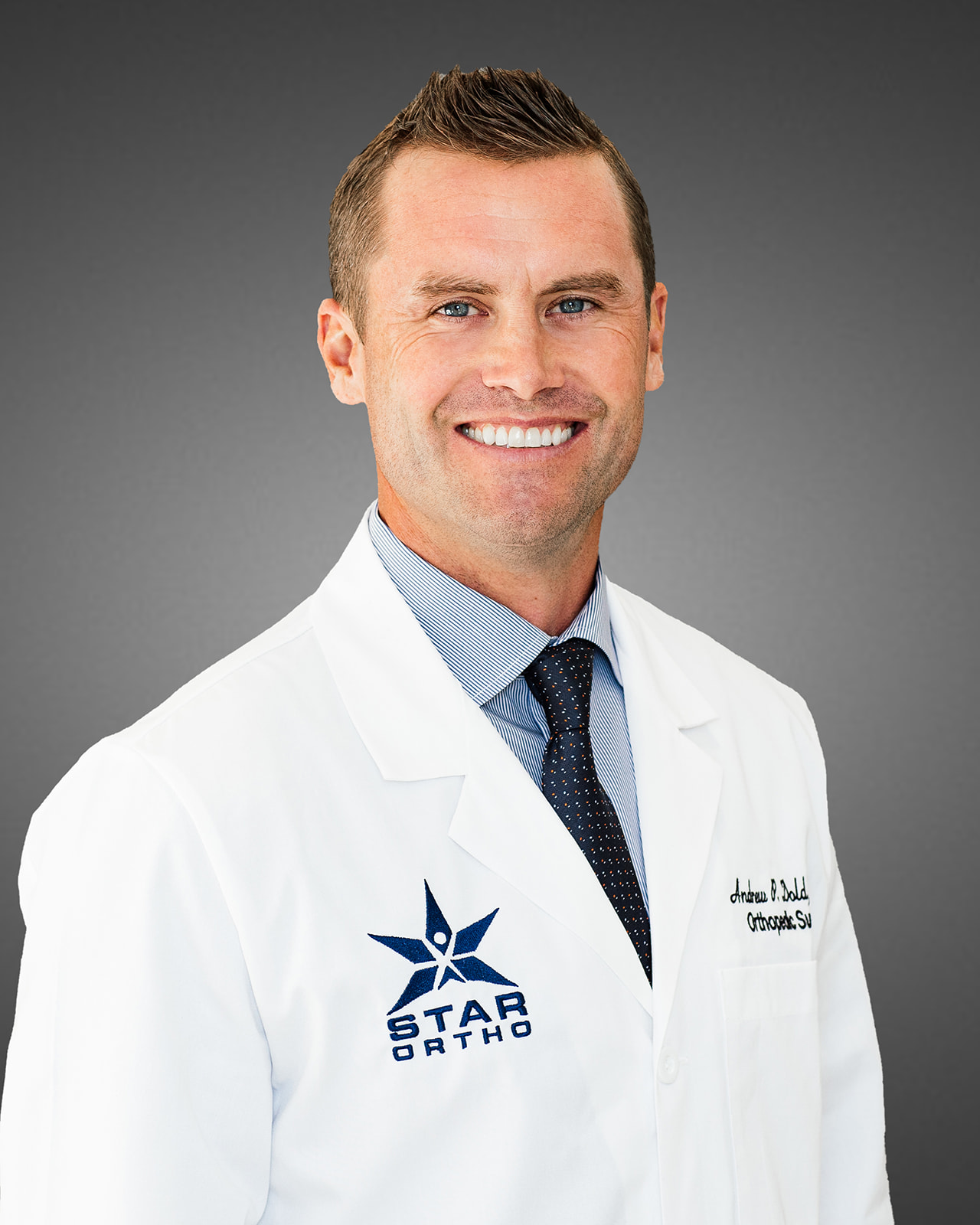
Dr. Andrew Dold, MD
- Double board-certified orthopedic surgeon (ABOS, FRCSC)
- Sports medicine and arthroscopy fellowship, NYU Langone
- Has treated professional athletes from the NFL, NBA, NHL and PGA Tour
- Medical Director, Gatorade Sports Science Institute at The Star
- D Magazine Best Doctors, 2019–2026
Request an Appointment with Dr. Dold
Or call 469-850-0680